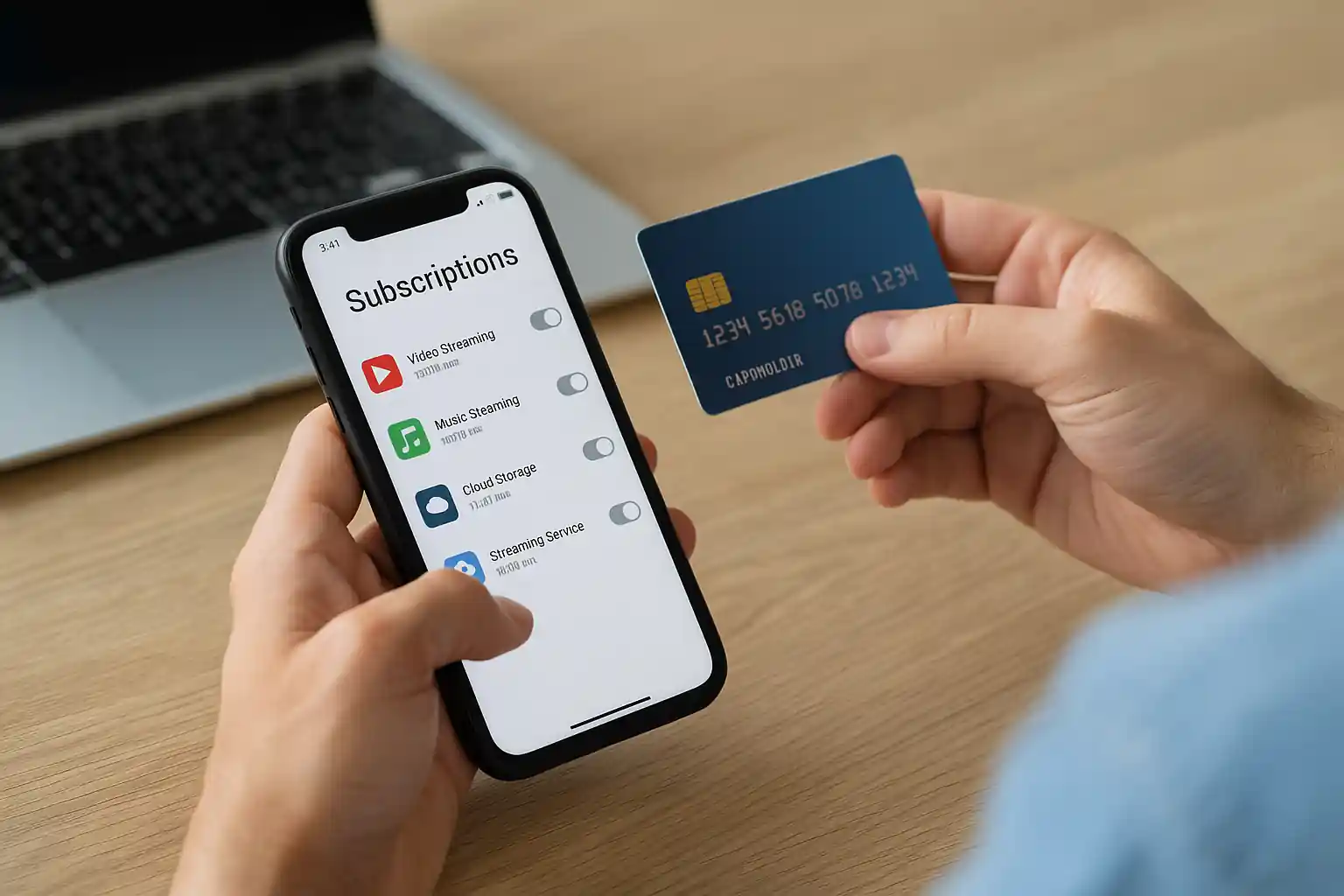

Credit cards are a normal part of financial life in the United States. They can offer convenience, rewards, purchase protections, and other benefits. When used responsibly, they can be a useful financial tool.
But for some people, credit cards create a completely different experience.
Having thousands of dollars in available credit can make it easy to spend money that is not actually sitting in a checking or savings account. A purchase feels affordable today, while the financial consequences appear later when the statement arrives.
This raises an important personal finance question:
Can a debit card be a better alternative for people who struggle to control their credit card spending?
For some people, the answer is yes. A debit card can create a more direct connection between spending and the money actually available in a bank account.
Credit and Debit Create Different Spending Experiences
The fundamental difference is relatively simple.
A debit card generally uses money already available in your checking account.
A credit card allows you to make purchases using a line of credit and repay the card issuer later.
That difference can have a significant psychological effect.
If you have $500 available in your checking account and spend $100 with your debit card, you can immediately see that approximately $400 remains.
With a credit card, you might make the same $100 purchase even if you have very little money in your checking account.
The money has not disappeared from your bank account yet.
That delay can make spending feel less real.
Your Credit Limit Is Not Your Budget
This is one of the most important concepts in personal finance.
If a credit card gives you a $10,000 credit limit, that does not mean you have $10,000 available to spend.
Your credit limit is determined by the card issuer.
Your budget should be determined by your income, expenses, savings goals, and financial priorities.
Those are two completely different numbers.
Someone earning $4,000 per month with a $10,000 credit limit does not suddenly have $10,000 of spending capacity.
The credit limit represents borrowing capacity, not income.
A Debit Card Can Create a Harder Spending Boundary
One of the biggest advantages of debit for someone who struggles with credit card spending is the visibility of the limit.
Imagine that you decide to allocate $600 per month for discretionary spending.
If that money is available in a checking account and you use a debit card, every purchase reduces the amount remaining.
After spending $450, you know that approximately $150 is left.
That creates a natural boundary.
A credit card can make the boundary less obvious because the available credit may remain high even as your actual financial resources decline.
The Goal Is Not to Demonize Credit Cards
Credit cards are not inherently bad.
Millions of Americans use them responsibly.
Someone might use a credit card for everyday purchases, earn cash back, pay the statement balance in full each month, and never carry expensive revolving debt.
For that person, the credit card can be a useful financial tool.
The problem occurs when credit becomes a way to spend money that the person cannot realistically afford to repay.
The issue is not necessarily the card itself.
It is the relationship between spending, income, and repayment.
When a Debit Card May Make Sense
A debit card may be particularly useful for someone who:
- Frequently carries credit card balances
- Uses credit to pay for everyday expenses they cannot afford
- Makes impulsive purchases when credit is available
- Regularly reaches high credit card balances
- Uses one credit card to help pay another bill
- Wants a clearer limit on discretionary spending
- Has difficulty tracking how much they are actually spending
In these situations, switching some everyday spending to debit can be a practical behavioral strategy.
Create a Spending Account
One strategy is to create a separate account specifically for everyday or discretionary expenses.
For example, you might receive your paycheck into your primary checking account and then transfer a predetermined amount into a second account.
That second account could be used for restaurants, entertainment, shopping, and other variable expenses.
The debit card connected to that account then becomes your spending tool.
If you put $500 into the account, you have $500 available for those expenses.
The system creates a limit before you start spending.
Use Your Debit Card as a Budgeting Tool
Debit does not have to be simply a payment method.
It can become part of your budgeting system.
Suppose your monthly budget allows:
$400 for groceries
$200 for restaurants
$150 for entertainment
$100 for personal purchases
You can organize your spending around those limits.
The goal is to make your financial boundaries visible.
Instead of relying on memory or willpower, you create a system that makes overspending more difficult.
Debit Does Not Automatically Stop Impulse Buying
There is an important limitation.
Switching from credit to debit does not magically eliminate impulsive spending.
If you have $3,000 in your checking account and spend all $3,000 impulsively, you still have a financial problem.
The difference is that you are generally spending money already available in your account rather than creating a credit card balance that must be repaid later.
That can make the consequences more immediate and easier to see, but good financial habits are still necessary.
Think of Credit as Money That Is Already Committed
If you continue using credit cards, one useful habit is to mentally reserve the money for every purchase.
For example, imagine you have $1,000 available for the month.
You use your credit card to spend $200.
Instead of thinking, “I still have $1,000,” think:
“I have $800 left because $200 is already committed to my credit card.”
This simple mental adjustment can make credit card spending much easier to control.
Don’t Chase Credit Card Rewards
Cash back, points, airline miles, and sign-up bonuses can be attractive.
But rewards should never become a reason to spend more than you planned.
Spending an extra $500 just to earn a small amount of rewards does not improve your finances.
A good rule is simple:
Use rewards to benefit from spending you were already planning to do, not to justify additional spending.
Be Careful With Buy Now, Pay Later
The same psychological issue can appear with installment services and buy-now-pay-later products.
A purchase may appear affordable because the cost is divided into several smaller payments.
But your total spending has not necessarily become smaller.
You have simply changed the timing of the payments.
If you already have several monthly obligations, adding another payment can make your financial situation increasingly complicated.
Always consider the total cost and your existing commitments rather than focusing only on the monthly payment.
If You Already Have Credit Card Debt
If you are already carrying significant credit card debt, changing how you pay for new purchases may be an important first step.
Continuing to charge new expenses while trying to pay down an existing balance can make progress much harder.
A temporary period of using debit or cash for everyday purchases can help stop new spending from being added to the problem.
At the same time, you can create a plan to reduce existing balances and review your budget.
The objective is to stop the cycle.
Your Emergency Fund Should Not Be Your Credit Card
Another important financial habit is maintaining an emergency fund.
A credit card may be available during an emergency, but relying on credit for unexpected expenses can turn a temporary problem into long-term debt.
An emergency savings account provides actual cash that can be used when something unexpected happens.
Even a relatively small emergency fund can provide an additional layer of financial flexibility.
As your finances improve, you can gradually increase the amount you keep in reserve.
Don’t Close Every Credit Card Immediately
If you discover that credit cards are causing problems, you do not necessarily need to close every account immediately.
The appropriate approach depends on your individual circumstances.
You may decide to stop using a particular card for everyday purchases while keeping the account open.
You might also reduce the number of cards you actively use and make your financial system simpler.
The important thing is to stop using available credit as an excuse to spend beyond your means.
Create Your Own Credit Card Rules
Personal rules can make financial decisions much easier.
For example:
“I only charge purchases that are already included in my budget.”
“I don’t use credit to cover expenses I cannot afford.”
“I wait 24 hours before making a large nonessential purchase.”
“I review my credit card balance every week.”
These rules create structure.
Instead of making a new financial decision every time you want to buy something, you already know the boundaries you have established.
The Question Is Not “Credit or Debit?”
The more important question is:
“Which payment method helps me spend within my means?”
For one person, that may be a credit card that is paid in full every month.
For another person, a debit card may provide the discipline needed to control spending.
There is no universal answer.
The best financial system is the one that allows you to pay your bills, save money, manage debt, and make purchases without creating financial stress.
Financial Control Matters More Than the Payment Method
It is easy to become obsessed with whether credit or debit is better.
But the payment method is only one part of the equation.
Your income matters.
Your expenses matter.
Your debt matters.
Your savings matter.
Your habits matter.
A debit card cannot compensate for spending significantly more than you earn.
A credit card cannot create income.
Both are simply tools within a larger financial system.
A Simple Experiment Can Teach You a Lot
If you are unsure whether credit cards are contributing to your spending problems, consider changing your routine for a month.
Use your debit card for everyday discretionary purchases.
Set a specific amount aside.
Track what happens.
At the end of the month, look at your spending.
Did you spend less?
Did you become more aware of your purchases?
Did you feel more in control?
Did you still make impulsive purchases?
The answers can tell you more about your personal spending behavior than a generic financial rule.
The Real Goal Is Financial Freedom
The purpose of switching from credit to debit is not simply to have a different piece of plastic in your wallet.
The purpose is to create greater control over your money.
You want to reach a point where you know how much you earn, how much you spend, how much you owe, and how much you can save.
You should be able to make a purchase without immediately wondering how you will pay for it later.
That is financial control.
Final Thoughts
Can a debit card be a better alternative for someone who cannot control their credit card spending?
For some people, absolutely.
Debit can create a more immediate connection between spending and available money. It can establish clearer limits and make it harder to spend beyond what is currently available in a bank account.
But the ultimate solution is not simply switching cards.
The real goal is learning to spend within your means.
If credit cards consistently lead to balances you cannot comfortably repay, using debit for everyday expenses may be a useful step toward rebuilding control. Once your habits and financial system are stronger, you can decide whether and how credit fits into your life.
Financial freedom does not come from having a higher credit limit.
It comes from knowing what you can afford, spending intentionally, keeping debt under control, and making sure your money is working toward the life you actually want.